



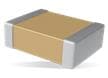
KEMET KPS L-Serie X7R SMD-MLCCs mit SnPb-Anschlüssen
Die KPS L-Serie X7R SMD-MLCCs mit SnPb-Anschlüssen von KEMET basieren auf einer proprietären Leiterrahmen-Technologie, mit dem sich ein oder zwei MLCCs senkrecht in ein einziges kompaktes SMD-Gehäuse stapeln lassen. Der angebrachte Leiterrahmen isoliert die Kondensatoren von der Leiterplatte, erhöht die mechanische sowie thermische Belastbarkeit und räumt Bedenken hinsichtlich hörbarem Mikrofonrauschen aus, das auftreten kann, wenn eine Vorspannung angelegt wird. Im Gegensatz zu herkömmlichen oberflächenmontierbaren MLCCs ermöglicht das Stapeln von zwei Chips die doppelte Kapazität bei gleichem oder sogar geringerem Platzbedarf. Der Galvanikprozess mit Zinn/Blei von KEMET bietet eine Platinenflexibilität von 10 mm und ist so konzipiert, dass mindestens 5 % Blei enthalten sind. Mehr erfahren
Merkmale
- -55°C to +125°C operating temperature range
- Reliable and robust termination system
- EIA 1210 and 2220 case sizes
- 10V, 16V, 25V, 50V, 100V, 250V, 500V and 630V DC voltage ratings
- 0.047μF up to 47μF capacitance range
- ±10% and ±20% capacitance tolerance
- Higher capacitance in the same footprint
- Potential board space savings
- Advanced protection against thermal and mechanical stress
- Provides up to 10mm of board flex capability
- Reduces audible, microphonic noise
- Low ESR and ESL
- SnPb-plated termination finish (5% Pb minimum)
- Non-polar device, minimizing installation concerns
- Tantalum and electrolytic alternative
Applikationen
- Switch-mode power supplies (input filters, resonators, tank circuits, snubber circuits, output filters)
- High-voltage coupling and DC blocking
- Lighting ballasts
- Voltage multiplier circuits
- DC/DC converters and coupling capacitors in Ćuk converters
- Smoothing circuits
- Noise reduction (piezoelectric/mechanical)
- Circuits with a direct battery or power source connection
- Critical and safety-relevant circuits without (integrated) current limitation
- Any application that is subject to high levels of board flexure or temperature cycling
Related Capacitors
KEMET Hochspannungs-C0G-MLCCs (in handelsüblicher und Automobilqualität)
≥500 V mit Kapazitätswerten von bis zu 150 nF und Gehäusegrößen von EIA 0603 bis 4540.

KEMET Hochspannungs-SMD-MLCCs mit X7R-Dielektrikum
Zeigt nur minimale Kapazitätsänderungen in Bezug auf die Temperatur.

KEMET ArcShield™ High Voltage Surface Mount Capacitors
Prohibits arc-over, significantly reducing resulting failures.
Veröffentlichungsdatum: 2016-09-16
| Aktualisiert: 2023-08-23