How Connected Vehicles Will Safely Leverage Smartphones
By Stephen Evanczuk for Mouser Electronics
Emerging trends highlight the role of the connected vehicle in transportation,
but vehicles are poised to become an essential platform for personal mobility. In combination with personal
electronics, the connected vehicle will redefine the mobile experience, bringing the separate capabilities of
mobile device
and vehicle together into a single, safe, personalized environment.
In many ways, smartphones have replaced automobiles as cultural icons, particularly among millennials and
post-millennials. Thanks to the diverse capabilities of these devices, smartphone adoption has rapidly
accelerated, outpacing many other services and media according to Pew Media (Figure 1).
Figure 1: Users have embraced smartphones, adopting them at a faster rate
than other leading communications devices and media. (Source: Pew Research)
Indeed, the smartphone’s impact on individuals’ depth of interaction with the world and society is
profound. In the same way, users rely on personal devices such as smart watches and fitness monitors to gain a
deeper understanding about their own bodies and their immediate environment. The connected vehicle promises to
add to the depth and breadth of resources available to individuals through their personal devices—and
enhance
the role of smartphones and other mobile devices in users’ interactions with the vehicle itself.
As part of their broad role in daily life, smartphones are already endemic to vehicular transportation.
Individuals now rely on smartphone apps for a wide range of services including route planning, navigation,
ridesharing,
traffic safety, parking information, transportation data management, fuel purchase, and fuel-consumption
tracking.
Indeed, connected vehicles will build on user familiarity not only with smartphones themselves but also with the
simple,
intuitive interfaces and interactive paradigms that have evolved with smartphone apps. In doing so, the
connected vehicle will play multiple roles as a mobile-device platform in facilitating their use within
vehicles,
leveraging their accessibility, and even enhancing their capabilities.
Leveraging Smartphones
In the most basic role in working with smartphones, connected vehicles stand to build on an existing relationship
with these devices. In-vehicle systems such as Apple CarPlay and Android Auto already provide services that
mirror mobile apps on the vehicle’s central display. For users, these systems provide easy access to
favorite
apps and online services. This relationship continues through manufacturer-provided remote-access apps that
allow
users to locate and remotely lock or unlock their vehicle.
With their enhanced capabilities, connected vehicle platforms look to offer significant improvements to these
services. For example, emerging digital key services such as Volvo’s would let vehicle owners use their
smartphones to grant a temporary remote key to another party. In this type of situation, a driver could grant
vehicle access to a retail store. In turn, the store could deliver packages to the driver’s parked
vehicle, using the one-time digital key to unlock the vehicle, which would automatically relock itself
afterwards.
Among desired automotive features, digital key technology ranks highly, particularly among younger consumers, who
will grow in buying power as advanced connected-vehicle technologies reach the market. According to the J.D.
Power 2017 U.S. Tech Choice survey, post-millennials in particular are willing to pay for digital key features
that
use a smartphone or watch instead of a physical key or key fob. In fact, the study documents the desire among
individuals in this “smartphone generation” to make their smartphone the center of their interaction
with the
vehicle for control of functions such as infotainment.
Complementary Resources
Some of the most promising opportunities for extending mobile-device functionality lie in the ability of
connected vehicles to use their powerful resources to complement these devices for services such as navigation.
Many users
prefer smartphone navigation apps over in-vehicle navigation systems. In fact, according to the J.D. Power 2016
U.S. Tech Experience Index study, among new owners of vehicles with built-in navigation systems, nearly
two-thirds
use their smartphone or a portable navigation device rather than the vehicle’s system. Yet, drivers often
find
gaps in travel directions from their smartphone navigation apps due to GPS dropout from natural obstructions or
because their mobile devices lack the radio sensitivity to maintain a lock on weak GPS signals.
Vehicles can take advantage of their size and ready power sources to provide a more sensitive signal-reception
platform or complement that platform with advanced inertial measurement unit (IMU) devices able to track
location in the absence of GPS signals. Similarly, connected vehicle platforms can offer resources to buffer
large data sets
such as detailed route maps—both speeding performance and filling in data gaps found in GPS or cell
coverage. Just as important, vehicle platforms can support the additional navigation-design complexity required
to resist
accidental or intentional interference including navigational signal spoofing.
The small size of smartphones meets practical needs for portability but leaves them less effective for user
interaction, particularly for vehicles in motion. Besides the difficulty in finding interface features on a
small screen, smartphone users can easily be distracted while struggling to touch specific app landing spots in
moving
vehicles.
Connected vehicle platforms will help minimize these difficulties not only with enhanced graphics for smartphone
mirroring, but also with sophisticated gesture-based user interfaces based on specialized semiconductor devices.
For example, the Analog Devices ADUX1020 IC integrates a
complete optical sensor system for time-of-flight-based proximity and 2-D gesture detection. To support even
more complex
gesture-based interfaces, the Microchip Technology GestIC
family
uses a near-field RF approach to support 3-D gesture detection. Instead of requiring users to touch a physical
button or screenpad location, interfaces based on these devices will let drivers or passengers simply make
specific hand or finger movements to control infotainment or environmental systems, for example (Figure
2).
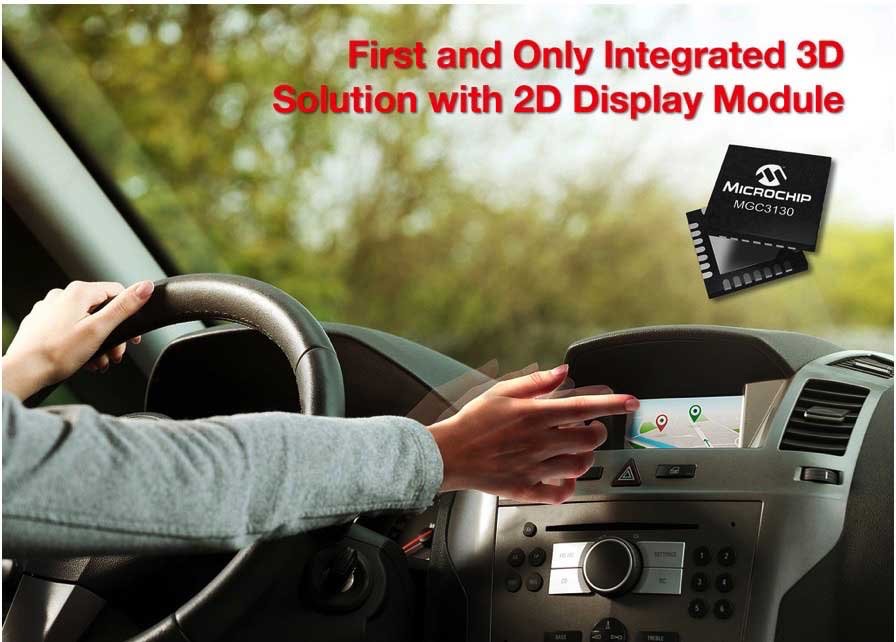
Figure 2: Advanced devices such as the Microchip Technology GestIC family
support advanced 3-D gesture interfaces that can reduce distractions associated with use of small smartphone
touch screens. (Source: Microchip)
Besides providing better options for user interaction, connected vehicles can serve as a platform for a richer
set of information. Just as wearables offer detailed information about the user’s health and immediate
environment, connected vehicle platforms can deliver deep information about the vehicle and the travel route.
Using the connected vehicle’s built-in sensor and connectivity services, the connected platform can
generate and
update highly automated driving (HAD) maps based on a broader set of sources such as vehicle-to-infrastructure
(V2I) and vehicle-to-vehicle (V2V) services unavailable to the smartphone. By combining data from HAD maps, V2I,
V2V,
and driver awareness safety systems, advanced platforms could keep drivers updated through their smartphones
even
while out of the vehicle.
Hardware Foundation
In the interplay between vehicle and mobile devices, connected vehicle platforms will draw on a substantial set
of capabilities built into a hardware foundation and tuned to the broader requirements of the automotive
environment. Wireless services are fundamental to connected vehicles and these platforms will take advantage of
a wide range
of connectivity options. Along with specialized protocols such as wireless access in vehicular environments
(WAVE)
for short-range V2I and V2V communications, the connected vehicle platform will supplement existing Bluetooth
options with Wi-Fi connectivity—one of the most anticipated features for mobile device users.
Users can already create in-vehicle Wi-Fi hotspots with their smartphones or dedicated devices attached to
vehicle power sources or even to the vehicle’s standard ODB-II port. Without a larger vehicle-integrated
antenna
system, however, ad hoc Wi-Fi hotspots suffer the same limitations in dealing with weak carrier cellular signals
as do smartphone-based navigation applications in dealing with weak GPS signals. Leveraging advanced
frequency-agile devices such as the Analog Devices AD9363 RF
transceiver, on-board systems can provide reliable connections to carrier services
through
high-performance antennas built into the vehicle structure.
Within the vehicle, advanced devices combine Bluetooth transceivers with dual-band Wi-Fi supporting 2.4GHz or
5GHz
radios. In anticipation of rapid acceptance of in-vehicle Wi-Fi, particularly for video streaming on mobile
devices,
manufacturers are already looking at performance enhancements such as multiple-input and multiple-output (MIMO)
for
robust connectivity and real simultaneous dual band (RSDB). RSDB supports simultaneous operation on both 2.4GHz
and
5GHz bands, enabling high-throughput connectivity across multiple types of personal devices and Wi-Fi devices
built
into the vehicle.
Vehicle manufacturers also recognize that increased use of smartphones, tablets, and other mobile devices in
vehicles means greater need for recharging those devices. Standard wireless power protocols such as Qi from the Wireless Power
Consortium
help simplify this aspect of smartphone usage. Rather than dealing with a tangle of different charging cables,
drivers and passengers can simply place compatible devices on Qi-compatible charging surfaces built into the
vehicle. Embedded into these surfaces, high-efficiency wireless charging coils such as Molex’s PowerLife coils support multiple
frequencies,
allowing developers greater flexibility in supporting coexistence within the active RF environments expected in
advanced vehicles. Driving those coils, Qi-compliant wireless-charging ICs use feedback mechanisms defined in Qi
protocols to safely manage device charging.
Beyond these individual components and subsystems, reference architectures such as Intel’s GO platform provide the kind of unifying framework required to coordinate
diverse
hardware systems and software services. Targeting self-driving vehicle applications, the GO platform defines an
architecture that combines accelerators based on ASICs for FPGAs with computing resources designed to scale from
Intel Atom processors to high-performance Intel Xeon processors plus Arria 10 FPGAs (Figure 3).
Figure 3: Designed for autonomous vehicle designs, reference architectures
such as the Intel GO platform provide a technological foundation able to scale from Atom-based systems
(shown
here) to very high-performance multi-board systems based on Intel Xeon processors. (Source: Intel)
Within this platform, specialized devices provide power and performance features while supporting automotive
functional safety requirements in line with Automotive Safety Integrity (ASIL) Level D. Although created for
autonomous and semi-autonomous vehicle systems, this type of platform points the way toward next-generation
systems
that would form the foundation of broader services including integrated support for mobile devices.
Roadblocks to Acceptance
Although hardware and software elements are ready to tighten the synergy between connected vehicles and mobile
devices, deployment depends on issues beyond technology. The idea of merging smartphone and vehicle
services—and doing it safely—requires a shift in functionality from smartphone to vehicle. Users may
find it fundamentally difficult to relax their grip on smartphones—much less pay to do so. According to
the
J.D. Power 2017 U.S. Tech Choice study, consumers show a greater willingness to pay for safety features such as
collision protection and driving assistance than for convenience features such as entertainment and
connectivity.
Nonetheless, better integration between smartphones and vehicles helps address a more serious problem—that
of
distracted driving. Mobile devices combine all the key risk factors for distracted driving in causing drivers to
take their eyes off the road, to take at least one hand off the wheel, and to divert their attention from the
driving process. Because of the multiple risk factors associated specifically with handheld use, local or
regional
legislators have enacted laws that prohibit use of handheld devices by vehicle drivers. Connected vehicle
platforms
can provide options able to address these risk factors—enabling users to safely employ the core features
of
their smartphones while on the move.
Conclusion
Through application mirroring and remote access functionality, the automotive industry has already hinted at the
kind of synergy that is possible between smartphone and vehicle. More advanced connected vehicle platforms
promise
to extend this relationship with smartphones by providing services that complement the limited resources of
smartphones while enabling their safe use within vehicles. For these platforms, advanced semiconductors and
platform
architectures provide the technological foundation able to support emerging requirements for connected vehicles.
At
the same time, emergence of smartphone-aware connected vehicle solutions depends as much on cost factors as
safety
concerns.
 Stephen Evanczuk is a
contributing writer for Mouser Electronics with more than 20 years of experience writing for and about the
electronics industry. Currently working as a freelance writer for electronics-industry companies and trade
press, he
writes about topics reaching broadly across both industry issues and design challenges affecting engineers --
ranging from analog and digital design to software and hardware for embedded systems. Prior to his freelance
career,
Evanczuk has worked in various editorial positions at CMP (Editor-in-chief of High-performance Systems and
section
editor at EE Times), VNU (Editor-in-chief of Engineering Tools), and McGraw-Hill (Microprocessor/systems editor
at
Electronics). Prior to that, he worked at TRW (Redondo Beach, CA) as a performance analyst for a very-large
scale
distributed system; as project manager for firmware optimization; and as a Staff Member for the TRW corporate
R&D leadership team. Prior to joining TRW, Evanczuk completed his doctoral work at the University of
Pennsylvania, where he developed a high-performance real-time distributed-processing data-acquisitions system
and
associated signal-processing algorithms, which were later used in TRW ground-based signal-acquisition systems.
Along
with his freelance work, Evanczuk is currently heavily involved in cloud-based distributed systems and apps
development.
Stephen Evanczuk is a
contributing writer for Mouser Electronics with more than 20 years of experience writing for and about the
electronics industry. Currently working as a freelance writer for electronics-industry companies and trade
press, he
writes about topics reaching broadly across both industry issues and design challenges affecting engineers --
ranging from analog and digital design to software and hardware for embedded systems. Prior to his freelance
career,
Evanczuk has worked in various editorial positions at CMP (Editor-in-chief of High-performance Systems and
section
editor at EE Times), VNU (Editor-in-chief of Engineering Tools), and McGraw-Hill (Microprocessor/systems editor
at
Electronics). Prior to that, he worked at TRW (Redondo Beach, CA) as a performance analyst for a very-large
scale
distributed system; as project manager for firmware optimization; and as a Staff Member for the TRW corporate
R&D leadership team. Prior to joining TRW, Evanczuk completed his doctoral work at the University of
Pennsylvania, where he developed a high-performance real-time distributed-processing data-acquisitions system
and
associated signal-processing algorithms, which were later used in TRW ground-based signal-acquisition systems.
Along
with his freelance work, Evanczuk is currently heavily involved in cloud-based distributed systems and apps
development.